Fragrance Oil vs Essential Oil: What’s the Difference?
Short answer: an essential oil is extracted from one plant: rose petals, lemon peel, lavender flowers. A fragrance oil is a blend designed by a perfumer, often including some essential oils alongside aroma chemicals. Essential oils smell like the plant they came from. Fragrance oils can smell like anything, including a whole perfume, and they smell the same in every batch.
Neither is “better”. They do different jobs. Here’s how to tell which one you actually need.
Where each one comes from
An essential oil is pulled straight out of plant material. Most are made by steam distillation: steam passes through the plant, carries the scent molecules out, and the oil separates from the water when it cools. Citrus oils are usually cold-pressed from the peel instead, the same way you’d squeeze zest.
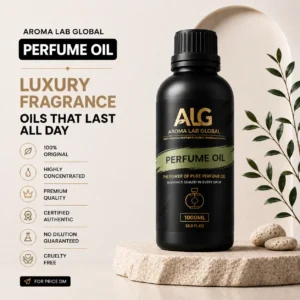
A fragrance oil is built rather than extracted. A perfumer combines materials, natural and lab-made, to reach a target smell. Our beginner’s guide to fragrance oil explains what goes into one.
Why natural oils cost so much
Some plants give up their scent very reluctantly. That’s why the most famous natural oils are also among the most expensive materials in the world.

Most rose oil comes from Bulgaria’s Rose Valley, Turkey and Taif in Saudi Arabia. Natural oud has its own story, which we tell in our oud guide.
Side by side
| Essential oil | Fragrance oil | |
|---|---|---|
| Source | One plant, extracted | A blend designed by a perfumer |
| Smell | The plant itself | Any scent, including complex perfumes |
| Batch to batch | Changes with harvest, weather and region | Made to the same formula every time |
| Price | Low (orange) to extremely high (rose, oud) | Steady and usually much lower |
| Range of scents | Limited to what plants give | Almost unlimited, including scents with no natural source like “fresh linen” or “sea breeze” |
| Strength in candles and soap | Often weak or fades in heat | Can be designed to hold up in wax and soap |
“Natural” doesn’t automatically mean safer
This surprises a lot of people. Essential oils are concentrated plant chemicals, and some of them need real care:
- Many citrus peel oils, bergamot among them, are phototoxic. On skin in strong sunlight they can cause burns or dark patches. In a Pakistani summer, that matters.
- Oils like tea tree, lavender and citrus have low flash points and count as flammable liquids. Keep them away from flames and hot stoves.
- Some natural materials are common skin allergens. Balsam of Peru is one of the most frequent causes of positive patch tests.
A well-made fragrance oil for skin is formulated to avoid these problems. That doesn’t make every fragrance oil safe for every use. Use each oil only for what it’s sold for, and patch test anything new.
Which one should you use?
| You want to… | Use | Why |
|---|---|---|
| Wear a scent like a designer perfume | Fragrance oil | No single plant smells like a finished perfume |
| Make candles with a strong throw | Fragrance oil | Most essential oils fade in hot wax |
| Make soap or detergent at scale | Fragrance oil | Stable, consistent and affordable |
| Smell pure lavender or peppermint | Essential oil | You want the plant itself |
| Build your own perfume from scratch | Both | Perfumers use naturals for depth and aroma chemicals for structure |
A middle path: fragrance oils with natural character
Many of our oils are built around a natural theme: rose, sandalwood, citrus. They give you the character of the plant without the price or the batch-to-batch swings. A few to try:
- Rose Empire: rose and musk with a fresh bergamot top.
- Sandalwood Candle Oil: creamy sandalwood, made for wax.
- Citrus Grove Diffuser Oil: bright citrus for a room, with no phototoxicity worries because it never goes on skin.
Browse by note too: rose, sandalwood, jasmine or bergamot.
Questions we get a lot
Are fragrance oils “fake”?
No. They’re designed rather than distilled. Most famous perfumes rely on lab-made materials, and many of those are identical to molecules found in nature.
Can I mix essential oils into a fragrance oil?
Yes, in small amounts, and perfumers do it all the time. Add a drop or two at a time and test on a strip, because some essential oils can easily overpower a blend.
Do essential oils last longer on skin?
Usually not. Many essential oils are light top notes like citrus and herbs, which fade quickly. Fragrance oils for skin are balanced with base notes so they last.
Is “nature identical” the same as natural?
It means the molecule is the same as one found in nature but made in a lab. Chemically it’s identical. It just didn’t come from a plant.
Sources
- Essential oil: extraction methods and safety, Wikipedia.
- Rose oil: yield and producing regions, Wikipedia.
- Agarwood: oil yield, Wikipedia.
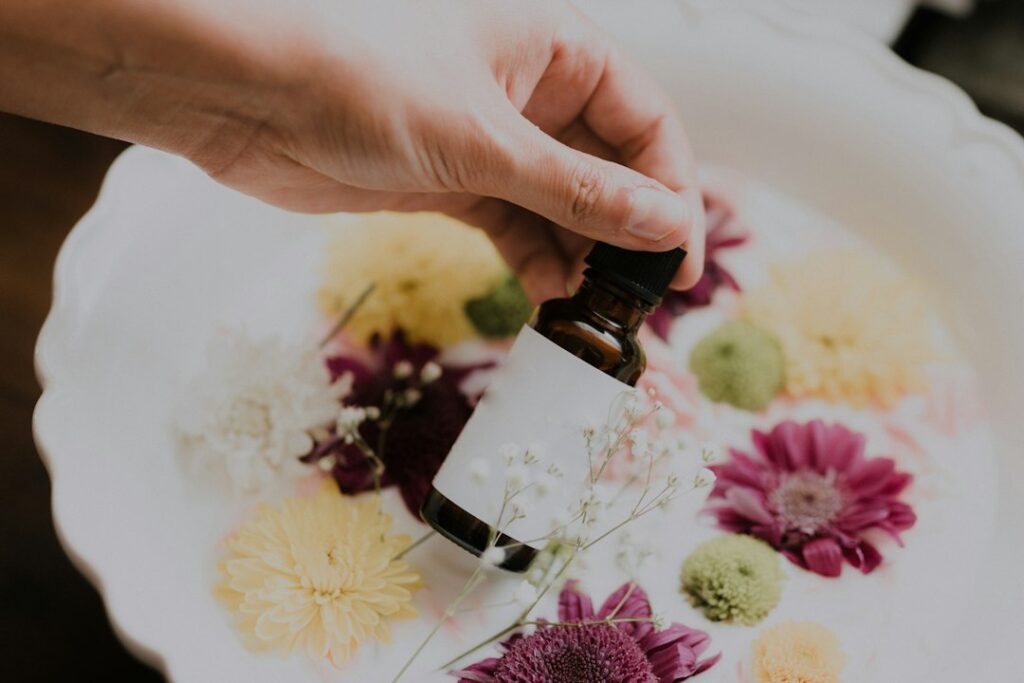
- Photo: Priscilla Du Preez on Unsplash.
Still not sure which oil to pick?
Answer five quick questions and get three oils to try, or build a sample set and test them at home before you buy a full bottle.
Written by the Aroma Lab team, Lahore
We blend, test and pack fragrance oils every day and answer hundreds of scent questions a week on WhatsApp. Last updated 11 October 2026.