
What Is Fragrance Oil? A Beginner’s Guide to Types and Uses
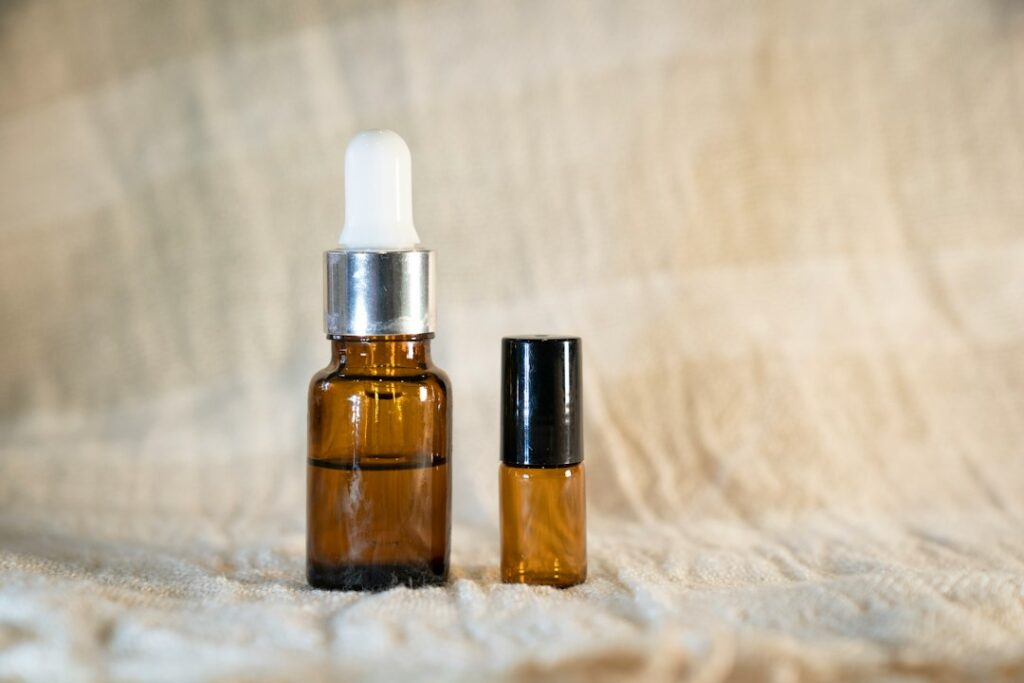
Short answer: a fragrance oil is a ready-made blend of scent materials, natural and synthetic, made to smell a particular way every time. The same idea is used for a perfume you wear, a candle, a reed diffuser, a bar of soap or a lotion. What changes from one to another is the formula and how much oil you use.
This is the guide we send people who are new to fragrance oils. It covers what’s inside the bottle, the different types and how strong to use each one. It also links you to our deeper guides when you’re ready for the next step.
What’s actually inside a fragrance oil?
Every scent you can smell is made of aroma compounds: small molecules light enough to float off a surface and reach your nose. A fragrance oil is a recipe of dozens of them, sometimes more than a hundred, chosen and balanced by a perfumer.
Those ingredients fall into three groups:
- Natural materials such as essential oils, absolutes and resins. They bring depth, but they change from harvest to harvest. Our guide to fragrance oil vs essential oil goes into this properly.
- Single aroma chemicals such as Iso E Super, Hedione or Ambroxan. Each one does one job very well, like adding a woody glow or a fresh jasmine lift.
- A carrier or solvent that holds everything together and makes the oil easy to measure. Some perfume oils have almost none. Products like reed diffuser oils use more.
Modern perfumery has relied on this mix since the late 1800s, when chemists first made materials like vanillin and coumarin in the lab. Today almost every perfume on a department store shelf is built the same way. The famous designer bottles are fragrance oils diluted in alcohol.
The main types, and what each is made for
All fragrance oils share the same basic building blocks, but they aren’t interchangeable. A formula has to suit the job. A candle oil has to survive hot wax. A soap oil has to stay stable in a soap base. A perfume oil has to be safe and pleasant on skin.
| Type | Made for | Where to start |
|---|---|---|
| Perfume oil | Wearing on skin, or diluting into your own spray | Fragrance oils |
| Candle fragrance oil | Soy, paraffin and gel wax, with strong hot throw | Candle oils |
| Diffuser oil | Reed and electric diffusers, room sprays | Diffuser oils |
| Soap and detergent fragrance | Bar soap, liquid soap, dishwash, laundry | Soap fragrances |
| Cosmetic fragrance | Lotions, creams, shampoos, hair oils | Cosmetic fragrances |
Attar is a related but older tradition, with its own methods and history. We’ve given it a guide of its own.
How much fragrance oil to use
This is the number people ask about most. The answer depends completely on what you’re making. Here are the ranges we work with in our own blending room:

Each of these has a step-by-step guide:
- Sprays and roll-ons: how to make perfume at home
- Candles: making soy candles with fragrance oil
- Diffusers: making a reed diffuser
Always weigh fragrance oil in grams on a small scale. Oils are thicker and heavier than they look, so measuring by spoon or by eye gives you a different strength every time.
How a fragrance oil is put together
Perfumers build a scent in layers that show up one after another: a bright opening, a heart and a long-lasting base. Knowing this helps you read a product page and understand why a scent changes on your skin over a few hours. Our guide to fragrance notes explains it with timings.
Scents also fall into families (fresh, floral, amber and woody) that tell you the overall character before you smell anything. If you know you love one family, you can shop by it. See fragrance families explained.
How to tell a good fragrance oil from a poor one
You can’t see quality in a bottle, but you can test for it. Here’s what we’d check, and what we check ourselves before a batch goes on sale:
- Smell it over time, not just once. Put a drop on a testing strip and smell it at the start, after an hour and the next morning. A good oil stays recognisable from start to finish. A poor one smells great for ten minutes, then flat or sour.
- Look for clarity. Most oils should be clear, even if they’re coloured. Cloudiness or bits at the bottom can mean water or a poor mix.
- Check that it suits the job. A cheap “multi-use” oil in a candle can smoke or lose its scent. Buy the type made for what you’re doing.
- Ask about batch consistency. If you’re making products to sell, your second order has to smell like your first. Ask your supplier how they make sure it does.
- Be wary of “pure” claims at low prices. Natural oils like rose and oud are rare and expensive. If something is sold as 100% natural rose at an everyday price, it almost certainly isn’t.
Is fragrance oil safe?
For its intended use, yes. Perfume oils are made to be worn on skin, and candle and diffuser oils are made for wax and air. Two rules matter most. Don’t put candle, diffuser or detergent oils on skin. Always patch test a new perfume oil on your inner arm before wearing it widely. Keep all oils away from children and out of eyes.
Wondering whether a fragrance oil is safe for your skin? Our fragrance safety guide explains IFRA rules, how to patch test at home, and which oils should never go on skin.
Questions we get a lot
Is fragrance oil the same as perfume?
A perfume spray is fragrance oil diluted in alcohol. A perfume oil is the same concentrate without the alcohol, which is why it is stronger and lasts longer on skin.
Can one fragrance oil be used for everything?
Not well. Candle, soap and skin products each need a formula that stays stable in that base. Use the type made for your product, and use oils sold for skin only on skin.
Why do fragrance oils come in grams, not millilitres?
Because recipes are written by weight. Weighing is far more accurate than measuring by volume, and it’s how every perfumer and candle maker works.
How long does a bottle of fragrance oil last before it goes off?
Stored well, most oils stay good for a year or more, often much longer. Heat, light and air are what age them. We cover storage in our guide to making perfume last longer.
Which size should I buy first?
For wearing, 25g is plenty to find out if you love a scent. For candles, diffusers or a small product line, start with 100g. When you’re ready to produce, move to 1kg.
Sources
- Aroma compound, Wikipedia.
- Perfume: history of synthetic aroma compounds, Wikipedia.
- Usage rates from Aroma Lab’s product guides, October 2026.
- Photo: Denise Chan on Unsplash.
Still not sure which oil to pick?
Answer five quick questions and get three oils to try, or build a sample set and test them at home before you buy a full bottle.
Written by the Aroma Lab team, Lahore
We blend, test and pack fragrance oils every day and answer hundreds of scent questions a week on WhatsApp. Last updated 12 October 2026.


